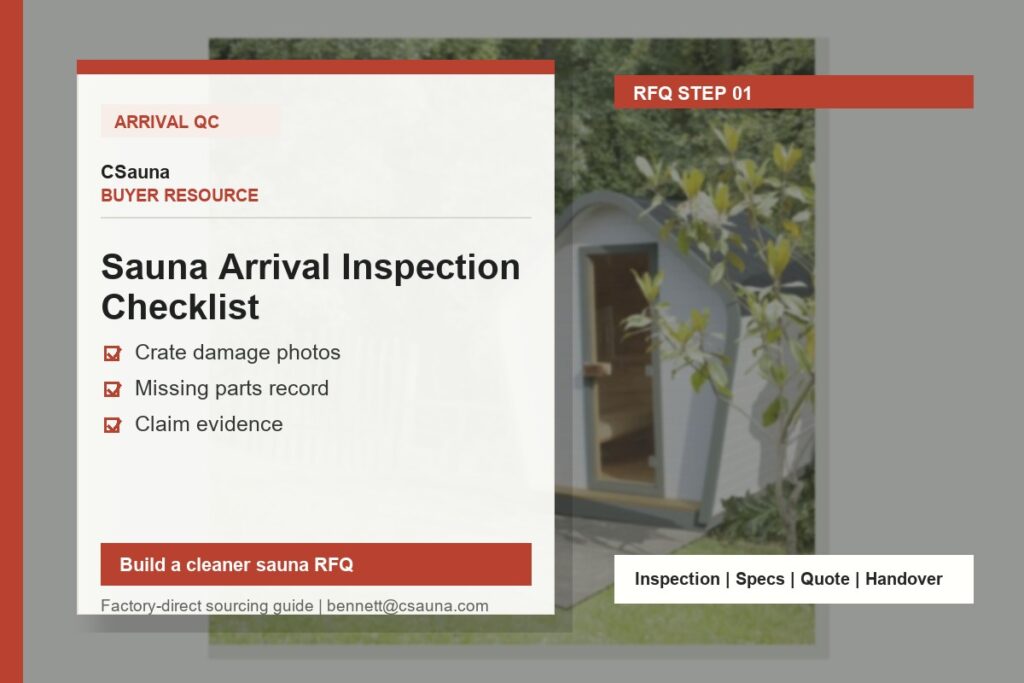
An arrival inspection is the record made when a sauna shipment reaches the buyer, warehouse, showroom, or project site. It is most useful when it connects the received packages to one order file: the model reference, packing list, delivery condition, labels, photos, and any exceptions noted before the goods are moved, assembled, or installed. This guide provides a practical sequence for distributors and project teams.
Prepare before the shipment arrives
Assign one receiver and make sure the order file is available at the delivery point. The receiver should have the purchase record, selected model references, packing list or shipping documents, delivery appointment details, and a camera or phone ready for photos. If a warehouse or third-party carrier receives the shipment, agree in advance on who can note visible exceptions and who receives the image record.
Do not treat a signed delivery receipt as a full quality inspection. It records the handoff condition at a particular moment. Visible carton, crate, label, count, or handling concerns should be documented promptly in line with the carrier’s and insurer’s applicable procedures.
Check the delivery before unloading is complete
| Check | What to record | Why it matters |
|---|---|---|
| Package count | Count crates, cartons, pallets, and loose items against the delivery and packing records. | Identifies a count discrepancy before packages are dispersed. |
| Exterior condition | Wide and close photos of dents, punctures, moisture, broken straps, shifted loads, or crushed corners. | Preserves the visible condition at delivery. |
| Labels and identification | Package labels, model references, consignee details, and any handling marks. | Keeps the inspection tied to the specific order and package. |
| Delivery paperwork | Delivery date, carrier reference, receiver name, and any exception notation used. | Supports later coordination through the relevant delivery process. |
| Receiving environment | Where packages were placed and whether they were protected from weather, impact, or unauthorized access. | Creates a traceable handoff into storage or site handling. |
Open packages in a controlled order
After the external condition is recorded, open packages in a way that preserves labels and allows parts to remain grouped by the packing list. Photograph the package before opening, the protective material, and the first visible condition of each major component. Keep glass, hardware, electrical items, manuals, and small parts together until they are matched to the order record.
For a showroom or multi-unit project, avoid combining loose hardware or documents from different units. A simple package-to-model log is more useful than a large collection of unlabelled photos after the fact.
Record findings by category
| Finding category | Evidence to retain | Next action |
|---|---|---|
| Count or identification difference | Packing-list line, package label, delivery record, and photos. | Keep the package separated until the record is reviewed against the order file. |
| Visible transport concern | Wide photos, close photos, time and location, and carrier notation where applicable. | Follow the applicable carrier, insurer, and delivery procedures before disposal or repair. |
| Component or finish question | Clear photos, affected package, model reference, and a factual description of the observation. | Hold the affected item for documented review; avoid assumptions about cause or remedy. |
| Document or label gap | List of expected and received manuals, labels, and configuration records. | Identify the specific missing file or language requirement in the order record. |
| Installation concern | Site photographs, selected drawing, and the qualified local party’s question. | Keep site and electrical work within the responsibility of the appropriate local professional. |
Keep the order file useful after arrival
When the receiving check is finished, store the photos and notes with the model reference, packing record, delivery reference, and approved configuration. That record can later support showroom handoff, warehouse picking, project coordination, or a factual question about a particular package. It is more reliable than relying on memory after the unit has been moved or assembled.
Do not turn arrival inspection into technical approval
Receiving confirms what was visibly delivered and the condition observed at that time. It does not replace assembly instructions, local structural review, electrical work, commissioning, permits, or market-specific approval. Those activities should remain with appropriately qualified parties and the documents applicable to the selected model and destination.
Use model references consistently
For a product reference used in a receiving record, see the sauna product library. For wood, glass, roof, lighting, and accessory directions, see materials and accessory options. The final condition, installation, and compliance requirements remain specific to the selected order and destination.
Working file preview: arrival inspection record
Use one inspection record for each delivery, then link each package observation to the order, packing-list line, package label, and photo set. The record should be prepared before unloading, completed by the receiver, and stored with the order file. It documents what was observed; it does not decide fault, remedy, insurance coverage, or technical suitability.
| Record field | What to capture | Useful evidence |
|---|---|---|
| Delivery identity | Order/project reference, delivery date/time, carrier reference, delivery location and receiver. | Delivery document and appointment record. |
| Package mapping | Package count, crate/carton/pallet marks, packing-list lines and any missing or unmatched item. | Wide photographs of all packages before dispersal. |
| Condition at handoff | Visible exterior condition, straps, wrap, moisture, corners, punctures, shifted loads and handling labels. | Wide and close photos with package mark visible where possible. |
| Opening check | Package opened, protective material, first visible condition, major components, small parts, manuals and labels. | Opening sequence photos and package-to-content notes. |
| Exception record | Factual observation, affected package, time, location, who was notified and current hold/segregation status. | Photos, delivery notation and relevant carrier/insurer procedure reference. |
| File closeout | Storage location, next owner, open point, review date and link to the current configuration file. | Completed inspection record with named reviewer. |
Four-stage receiving checklist
| Stage | Receiver action | Do not do yet |
|---|---|---|
| Before unloading | Have the packing/delivery record, camera, assigned receiver and protected holding area ready. | Sign away visible exceptions without recording the condition under the applicable delivery procedure. |
| At handoff | Count packages, photograph the full shipment, capture labels/marks and record visible condition before packages are moved apart. | Assume a clean outer wrap proves every internal component is correct. |
| Controlled opening | Open in packing-list order, keep hardware/documents with the relevant unit, and photograph first-visible condition and protective material. | Mix loose parts, labels, manuals or glass between multiple units. |
| After inspection | Link records to the order file, store or segregate packages, assign open-point owners and follow the applicable carrier/insurer process. | Install, repair, discard packaging, or make a technical conclusion before a documented exception is reviewed. |
How to write a useful exception note
Use observable language. State the package mark, location of the observed condition, date/time, delivery state, and the photos or documents attached. For example, write “crate mark C-03: outer corner has visible compression; two wide photos and one close photo taken before opening” rather than “damaged product.” The first description preserves evidence; the second assumes cause and remedy before review.
Keep components and evidence together
- Keep carton labels, packing-list references, manuals and loose hardware with the related unit until identification is complete.
- For multiple-unit deliveries, create a separate photo folder or naming convention for each package/model reference.
- Separate an item that needs review from general stock or installation materials and mark its current status.
- Retain photographs of protective packaging and package marks where a condition question may need review.
- Record the person who moved a package to storage, showroom or site after inspection.
- Use the current selected drawing/configuration file when a component, finish, label or document appears inconsistent.
Receiving boundary and next steps
Arrival inspection confirms count, labels and visible condition at a defined time. It does not replace assembly instructions, approved installation process, local structural/electrical work, commissioning, permits, insurance decisions, product-cause analysis, or market-specific approval. Claims, replacement parts, commercial treatment and technical work should be handled from the documented order/case record with the appropriate responsible parties and qualified local professionals.