A sauna pricing comparison scorecard helps importers avoid a classic mistake: choosing the lowest supplier offer before checking product scope, packing, heater details, warranty, spare parts, shipping data, and landed-cost assumptions. For a bulky product like a sauna, a low unit price can become expensive if the supplier offer is incomplete.
We wrote this guide for sauna distributors, importers, retailers, showrooms, builders, commercial project teams, and private-label brands comparing multiple supplier offers. Use it with the sauna buyer file template, FOB price-file guide, shipping costs guide, and import duty / HS code checklist.
Fast Recommendation
Do not award a sauna order to the lowest supplier offer until every supplier has answered the same buyer file. Normalize model size, wood species, heater, accessories, packaging, CBM, Incoterm, lead time, warranty, spare parts, and document support. Then score each supplier offer out of 100.
Use these supplier-comparison questions or copy the buyer file template.
Why supplier-offer comparison Is Hard for Saunas
Saunas are not small carton products. A supplier offer can include a wooden structure, heater, controls, stones, lighting, glass, benches, accessories, spare parts, private-label packaging, manuals, labels, and export packing. Two suppliers can both write “outdoor sauna” while quoting different wood thickness, heater brands, hardware sets, packing methods, or warranty responsibilities.
International trade terms also matter. The International Chamber of Commerce publishes Incoterms 2020, and CBP reminds importers to provide full product descriptions, country of origin, composition, intended use, and pricing/payment information before importing. In practical buyer language: compare like with like, then ask your broker and forwarder to validate the missing landed-cost pieces.
Reference sources: ICC Incoterms 2020 overview, CBP Tips for New Importers and Exporters, and CBP Basic Importing and Exporting.
The 100-Point Sauna supplier offer Scorecard
Use the table below as a practical scoring model. It does not replace buyer judgment, but it makes supplier conversations cleaner. A supplier offer that scores 92 with a slightly higher FOB price can be safer than a supplier offer that scores 61 and leaves the importer to discover missing costs later.
| Category | Pts | What to check | Red flag |
|---|---|---|---|
| Product scope and fit | 20 | Model, dimensions, capacity, wood species, wall thickness, roof/floor details, heater, controls, lighting, glass, stones, and accessories. | The supplier offer uses broad names with no technical details. |
| Price transparency | 15 | Unit price, quantity breaks, MOQ, sample cost, tooling, private-label fees, payment terms, price validity, and currency. | The supplier gives one number but no inclusions or validity date. |
| Landed-cost readiness | 15 | Incoterm, FOB port, package dimensions, CBM, gross weight, HS/HTS questions, duty/tax assumptions, and forwarder-ready data. | The supplier offer cannot support a freight or broker estimate. |
| Packing and container planning | 15 | Carton/crate method, pallet needs, export protection, labels, loading photos, FCL/LCL fit, and damage-prevention plan. | Packing is described only as “standard export packing.” |
| Compliance and documents | 10 | Heater specs, voltage, certification status, manuals, labels, commercial invoice, packing list, and project submittal documents. | Electrical or document questions are answered vaguely. |
| Warranty and after-sales | 10 | Warranty coverage, exclusions, claim evidence, spare-parts kit, replacement lead time, private-label support, and dealer handover materials. | No clear process for damage, missing parts, or warranty claims. |
| Lead time and reliability | 10 | Production lead time, QC checkpoints, inspection window, shipment readiness, reorder timing, and peak-season constraints. | The lead time sounds optimistic but has no production milestone plan. |
| Communication quality | 5 | Response speed, answer completeness, buyer file discipline, willingness to clarify assumptions, and ability to support buyer decisions. | Fast price reply, slow technical reply. |
Normalize Supplier Offers Before Scoring
Before scoring, convert every supplier response into the same comparison format. If one supplier offer includes heater and another does not, the price difference is not real. If one supplier offer is FOB and another is DAP, the buyer is comparing different cost responsibility. If one supplier gives CBM and another does not, the landed-cost comparison is incomplete.
| pricing field | Normalize to | Why it matters |
|---|---|---|
| Model and size | Same capacity, dimensions, layout, roof/floor structure, and buyer use case. | Small size or structure changes can create a false price advantage. |
| Wood and material | Same wood species, thickness, finish, bench material, glass, hardware, and insulation assumptions. | Material changes affect durability, climate fit, and perceived value. |
| Heater and electrical | Same heater type, voltage, phase, controls, certification status, stones, and accessory list. | Heater omissions are one of the easiest ways for a supplier offer to look cheaper. |
| Incoterm and port | Same Incoterm, named port/place, currency, and price validity date. | FOB, CIF, DAP, and DDP allocate costs and risk differently. |
| Packing and CBM | Same package count, dimensions, CBM, gross weight, labels, pallet/crate plan, and loading assumptions. | Sauna packages are bulky, so packaging affects freight and damage risk. |
| Warranty and support | Same warranty duration, exclusions, required details, spare parts, and after-sales responsibility. | After-sales cost becomes the buyer’s problem if the supplier offer is unclear. |
Red Flags in Sauna supplier offers
A supplier offer can be polite, fast, and still risky. The most dangerous supplier offers are often the ones that look simple because the supplier has not shown the assumptions. Use these red flags to decide what to ask before you approve a sample order, first container, private-label launch, or commercial project order.
| Red flag | Risk | buyer file follow-up |
|---|---|---|
| No package dimensions or CBM | You cannot estimate freight, storage, or per-unit landed cost. | Ask for package count, dimensions, gross weight, CBM, and loading plan. |
| Heater not clearly specified | The supplier offer may omit a major cost or compliance decision. | Ask for heater model, power, voltage, phase, controls, stones, and document status. |
| Incoterm is missing or vague | The buyer and supplier may assume different cost responsibility. | Ask for named Incoterm, named port/place, currency, and price validity. |
| Warranty is only one sentence | Claims, parts, shipping damage, and dealer responsibility may become unclear. | Ask for coverage, exclusions, evidence rules, spare parts, and response process. |
| Packing is not described | Damage risk can rise, especially for LCL or mixed-model orders. | Ask for export packing method, labels, carton marks, pallet/crate needs, and loading photos. |
| Private-label details are skipped | Branding, manuals, labels, warranty cards, barcodes, and carton marks can delay production. | Ask for artwork approval steps, SKU labels, manual language, and packaging sample timing. |
| Lead time has no milestones | A short lead time may hide production, QC, document, or peak-season constraints. | Ask for deposit date, material prep, assembly, QC, packing, and ready-to-ship schedule. |
How to Interpret the Final Score
The scorecard works best when the buyer uses it as a conversation tool, not as a rigid procurement formula. If a supplier loses points because one answer is missing, send the gap back as a clean buyer file question. A serious supplier should be able to clarify scope, packing, documents, and warranty before the order is locked.
| Score | Meaning | Next action |
|---|---|---|
| 85-100 | Strong supplier offer with clear scope, good landed-cost inputs, and manageable operational risk. | Shortlist supplier and confirm final buyer file, sample, or first container plan. |
| 70-84 | Usable supplier offer, but several assumptions need clarification before approval. | List focused follow-up questions and missing package, warranty, or document details. |
| 55-69 | Price may be attractive, but too many decision inputs are missing. | Do not compare price yet; ask supplier to rebuild the supplier offer using the same buyer message format. |
| Below 55 | High risk for importers, distributors, and private-label buyers. | Use only as a benchmark; avoid deposit until the missing scope and risk items are resolved. |
Editable comparison workbook
supplier-offer comparison worksheet buyers can actually use
For sauna imports, the first unit price is only one line in the decision. A practical scorecard needs to make every supplier supplier offer the same model scope, same electrical route, same packing basis, same document boundary, and the same after-sales responsibility before the buyer compares price.
Workbook tabs and fields
| Workbook tab | Fields to collect | How the buyer uses it |
|---|---|---|
| Supplier and buyer context | Supplier name, factory entity, contact owner, buyer role, destination country, destination port, sales channel, first-order quantity, sample need, decision deadline. | Separates factory comparison, trading-company comparison, distributor program comparison, and one-off project comparison before price is reviewed. |
| Model and specification match | CSA model code, product URL, exterior size, capacity, heater type, voltage, wood species, glass/door direction, bench layout, controls, accessories, logo or private-label requirement. | Prevents a low supplier offer from being compared against a larger model, richer heater package, different wood, or different packing method. |
| Commercial terms | Unit price, MOQ, sample price, packaging method, quoted CBM, Incoterm, payment terms, price validity, lead time, spare parts, label/manual inclusion. | Creates a comparable landed-cost view instead of judging the first FOB number alone. |
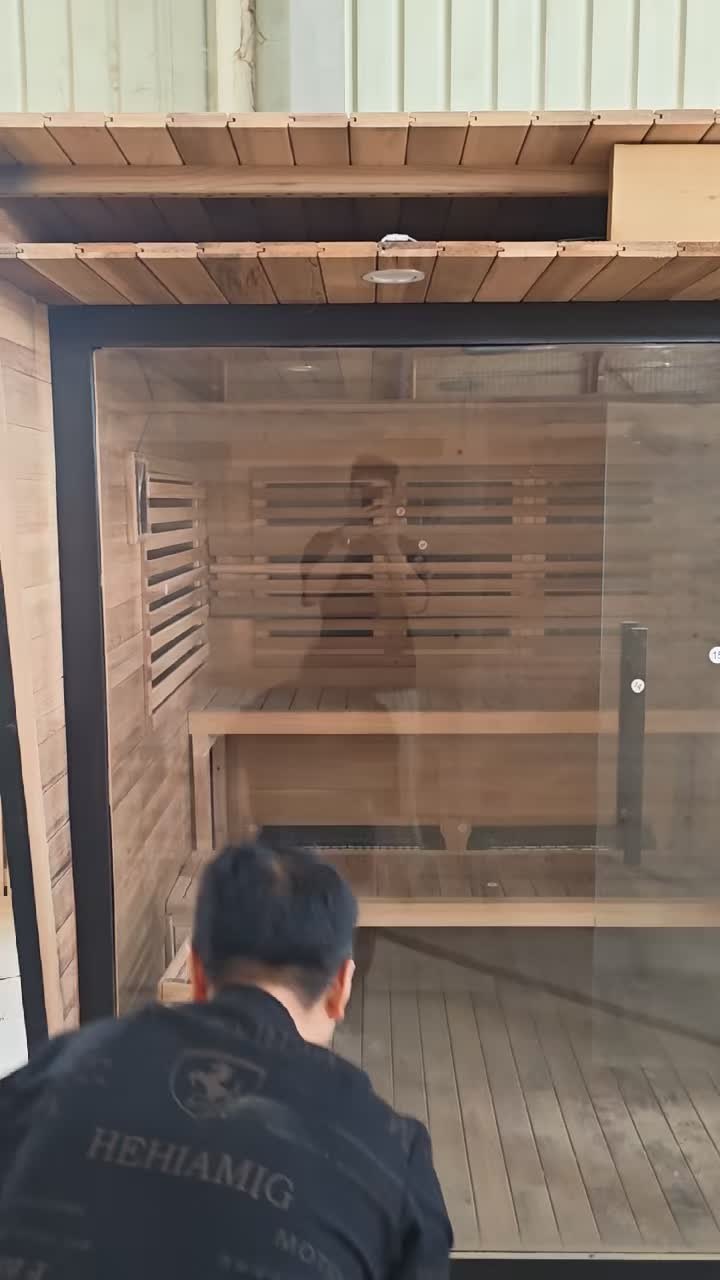
| Factory evidence | Production photos, packing photos, heater/control photos, certificate route, inspection availability, loading records, carton marks, warranty owner, parts support owner. | Shows which supplier offer is backed by verifiable production evidence before deposit, balance payment, or shipment release. |
| Decision notes | Unanswered questions, buyer risk, supplier follow-up owner, required drawing change, required label change, sample need, final status. | Keeps the shortlist readable for managers who were not in the original supplier conversation. |
Landed cost normalization sheet
| Cost line | What to prepare from supplier | Buyer review note |
|---|---|---|
| Base unit price | Currency, Incoterm, quantity tier, price validity date, included heater/control/accessory scope. | Do not compare a bare shell supplier offer with a heater-and-control package supplier offer. |
| Packing and protection | Carton or crate method, corner protection, pallet need, moisture protection, carton marks, spare-parts box. | Weak packing can turn a lower supplier offer into higher claims and replacement cost. |
| CBM and loading | Package dimensions, gross weight, net weight, CBM, loading quantity, loading photo plan. | Use CBM to allocate freight per unit before comparing suppliers. |
| Electrical and heater route | Voltage, phase, heater brand or route, controller, label language, manual language, market document route. | Wrong electrical assumptions create permit, warranty, and replacement risk. |
| Destination-side cost | HS code suggestion, invoice description, packing list detail, certificate/document availability. | Brokerage, duty, inspection, and local handling must be estimated outside the FOB line. |
| After-sales reserve | Warranty term, parts list, replacement lead time, claim evidence rules, training or service notes. | A supplier offer with no service boundary needs a higher risk reserve. |
Supplier score example
| Score area | Weight | Strong answer | Weak answer |
|---|---|---|---|
| Product match | 25% | Same model size, heater, voltage, wood, glass, bench, accessory and packing scope confirmed. | Only a product photo and short price line are provided. |
| Cost transparency | 20% | FOB/EXW basis, CBM, package data, sample policy, MOQ, validity and payment term are visible. | Price is low but packing, CBM, validity, and included accessories are unclear. |
| Factory proof | 20% | Production, packing, heater, inspection, and loading evidence route is agreed before deposit. | Supplier promises quality but gives no photo or inspection boundary. |
| Market readiness | 20% | Voltage, label, manual, certificate question, HS code and destination document route are discussed. | The supplier offer ignores destination market differences. |
| Service boundary | 15% | Warranty, spare parts, claim evidence, replacement timing and service owner are named. | After-sales responsibility starts only after a problem appears. |
For the editable supplier-offer comparison workbook, record the buyer role, target market, model families under review, and whether the file is for sample order, mixed container, distributor planning, or a project purchase. The worksheet can be used without contacting sales. If model references are needed, pair the workbook with the CSauna product catalog.
Buyer file worksheet
supplier-offer comparison rows to collect before choosing a supplier
Use this worksheet with any sauna supplier supplier offer. The goal is not to force a quick buyer file; it is to make every supplier offer comparable before purchasing, finance, logistics, and after-sales teams approve the order.
| supplier offer row | What to collect | Buyer decision it protects |
|---|---|---|
| Model scope | Model code, product link, exterior size, capacity, layout, glass side, door swing, bench layout, and accessory list. | Prevents comparing different sauna rooms under the same generic product name. |
| Wood and finish | Wood species, grade direction, surface tone, wall board thickness, roof color, exterior protection, and certificate requirement. | Separates real material value from a low price built on a different wood specification. |
| Heater and electrical | Heater type, kW, voltage, phase, controller, stones, cable route, heater guard, and compliance route. | Avoids approving a supplier offer that excludes one of the most important cost and installation decisions. |
| Quantity and MOQ | Sample plan, MOQ, price break levels, mixed-container allowance, model mix, and order validity date. | Shows whether the supplier offer fits a first sample, distributor launch, or repeat container order. |
| Packing and loading | Package count, dimensions, CBM, gross weight, crate or carton method, labels, loading photos, and LCL/FCL assumptions. | Lets logistics estimate real freight cost and damage risk before deposit. |
| Documents and after-sales | Commercial invoice data, packing list, manual language, label format, certificate route, warranty boundary, spare-parts list, and claim evidence rules. | Keeps the buyer file usable after the order ships, not only before payment. |
Decision log for the purchasing file
| If the supplier offer looks attractive because… | Check this before approval | Decision note to record |
|---|---|---|
| The unit price is lower | Heater, wood, packing, accessories, and warranty are all included at the same scope. | Price accepted only after exclusions are written in the buyer file. |
| The lead time is shorter | Material prep, assembly, QC, packing, document, and loading milestones are realistic. | Lead time accepted only with production milestone dates. |
| The product photo looks similar | Dimensions, glass, bench, heater, wood, roof, and packing match the requested model. | Photo match is not enough without written specification match. |
FAQ
How should an importer compare sauna supplier offers?
Compare supplier offers on normalized scope, Incoterm, package data, landed-cost inputs, heater and accessory inclusions, compliance documents, warranty terms, spare parts, lead time, and supplier responsiveness instead of only comparing the first FOB price.
Why can the lowest sauna supplier offer be risky?
A low supplier offer can omit heater details, packing protection, spare parts, documentation, carton marks, warranty responsibility, package dimensions, or destination-side cost assumptions. Those omissions can increase the real landed cost.
What score should a good sauna supplier offer include?
A strong supplier offer should score well on product fit, transparent inclusions, stable pricing, packing and CBM data, compliance readiness, warranty support, production lead time, shipping coordination, and buyer file follow-up quality.
Should FOB, CIF, DAP, and DDP supplier offers be compared directly?
No. Different Incoterms allocate cost and responsibility differently. Buyers should normalize supplier offers into a comparable landed-cost model before making a supplier decision.
Can CSauna help buyers compare supplier offers?
We can help buyers clarify product scope, model mix, heater specs, packing data, FOB terms, package dimensions, CBM, spare parts, warranty support, and project details so the buyer can compare supplier offers more accurately.
Model reference notes for supplier-offer comparison
Use this article together with the CSauna product reference catalog so the buying file connects advice to a real sauna model, package record, and review note.
- Keep the model code and product page link in the same file as the checklist.
- Match photos, dimensions, heater/control scope, packaging, and destination notes before comparing suppliers.
- Save the final worksheet and supporting photos before handing the file to purchasing or operations.
| Product scope | Compare the same capacity, wood, heater, glass, bench layout, accessories, and packing method before reading price. |
|---|---|
| Supplier proof | Keep production photos, inspection records, package data, warranty terms, and delivery assumptions next to the supplier offer. |
| Decision note | Shortlist models by risk and completeness, not by first unit price alone. |