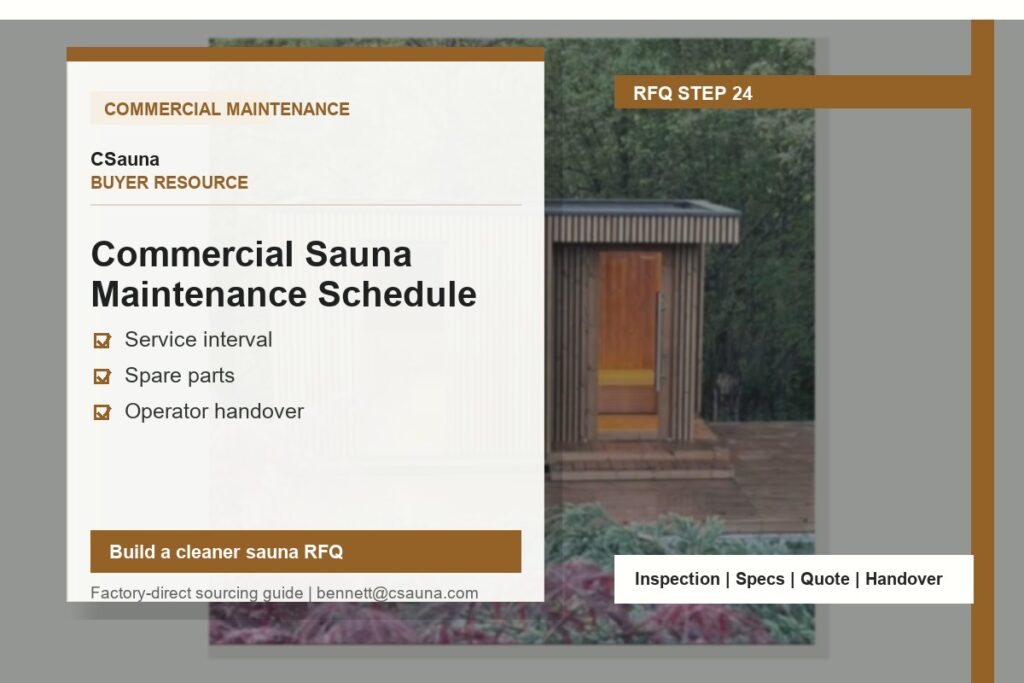
Commercial Sauna Operations
Commercial sauna maintenance schedule for hotels, spas, and gyms
A commercial sauna maintenance plan should protect guest safety, wood condition, heater performance, and service records. The schedule below is written for operators who need a practical handoff between the facility team, dealer, and factory support file.
Build the schedule around use frequency.
A hotel or gym sauna is exposed to repeated door cycles, moisture, towel contact, cleaning chemicals, and long operating hours. That makes maintenance different from a private home sauna. The room may still be simple to use, but the record keeping needs to be more disciplined.
Use this schedule together with the model page, approved drawing, heater specification, wood material note, and spare-parts file. For outdoor rooms, also add roof, drainage, exterior trim, and seasonal exposure checks.
1. Daily operating checks
Daily checks should be short enough for staff to complete consistently. The goal is to catch visible issues before guests use the room.
| Check | What to inspect | Action standard | Record |
|---|---|---|---|
| Door and glass | Smooth closing, handle, hinge, seal, glass edge | No rubbing, loose hardware, or cracked glass | Opening checklist |
| Bench and backrest | Surface, supports, loose board, exposed screw | No wobble or splinter risk | Staff initials |
| Floor and threshold | Water, towels, debris, slip risk | Dry, clean, and clear | Cleaning log |
| Heater area | Guard, stones, unusual smell, blocked airflow | Clear of towels and user items | Operating log |
| Ventilation | Air inlet/outlet not blocked | Air path open before use | Opening checklist |
| Lighting and controls | Lamp, control display, timer, switch response | Normal response and no flicker | Issue note if abnormal |
2. Weekly cleaning and condition review
Weekly work should go deeper than basic cleaning. It is the right time to catch water marks, surface wear, and small hardware changes.
| Area | Weekly task | Reason | Who checks |
|---|---|---|---|
| Wood surface | Wipe with approved method; check dark marks and rough spots | Protects appearance and guest comfort | Facility team |
| Bench underside | Inspect supports and screw caps | High-use benches loosen first | Maintenance lead |
| Door hardware | Check hinge screws, handle, catch, and seal pressure | Door failure affects safety and guest experience | Maintenance lead |
| Heater stones | Look for crumbling, dust, or blocked airflow | Stone condition affects heat performance | Qualified staff |
| Glass panels | Clean and inspect clips or gaskets | Prevents small seal issues becoming service calls | Facility team |
| Exterior room | For outdoor rooms, check roof edge, base, drainage, and trim | Weather exposure changes maintenance timing | Site manager |
3. Monthly service inspection
Monthly inspection should create a written record. This is where the operator separates normal cleaning from maintenance decisions.
| Inspection point | Acceptable condition | If not acceptable | File note |
|---|---|---|---|
| Heater recovery | Room reaches operating temperature in expected time | Check stones, sensor, voltage, door seal, and ventilation | Temperature log |
| Controller and sensor | Stable control response and no visible damage | Record error code or abnormal reading before service | Control photo |
| Bench load path | Supports remain tight and boards stay level | Pause use if support is loose or cracked | Bench photo |
| Wood movement | No major gaps, swelling, or panel movement | Check humidity, cleaning method, and ventilation | Panel note |
| Lighting | No water marks, flicker, broken cover, or exposed cable | Repair before continued guest use | Lighting photo |
| Accessory condition | Bucket, ladle, thermometer, signs, and timer intact | Replace damaged guest-facing items | Accessory list |
4. Quarterly and seasonal maintenance
Quarterly checks help operators plan parts before failure. Outdoor rooms should add weather review at the start and end of severe seasons.
| Timing | Task | Why it matters | Planning note |
|---|---|---|---|
| Quarterly | Review all service tickets and repeated complaints | Patterns reveal heater, door, or cleaning issues | Update maintenance file |
| Quarterly | Check spare parts on hand | Avoid downtime for hinges, seals, lamps, sensors, and fasteners | Compare with parts kit |
| Season start | Outdoor roof and drainage inspection | Protects wood and exterior service life | Photo roof edge and base |
| Season start | Confirm staff cleaning method | Wrong chemicals damage wood and fittings | Train new staff |
| Season end | Record wear areas and plan replacements | Keeps next season predictable | Order before peak period |
| Annual | Review warranty and replacement history | Improves future purchasing and dealer support | Attach to buyer file |
How different buyers should use this file
The same commercial sauna operations resource should not be used in the same way by every buyer. An importer may use it to compare factory readiness, a dealer may use it to train staff, and a project owner may use it to keep contractors and operators aligned.
The best version is short enough for daily use but detailed enough to support a future service question. Keep the public article as the shared reference, then keep the editable sheet inside the buyer file with photos, model codes, dates, and responsibility names.
| Buyer role | How to use the file | Fields to keep visible | Best handoff moment |
|---|---|---|---|
| Importer | Use it to compare suppliers and confirm whether the factory can support repeat orders after shipment. | Model code, material, heater standard, packing, spare parts, document request | Before confirming container mix |
| Distributor | Turn the checklist into a dealer-facing operating sheet and attach it to each model family. | SKU, installed base, service cases, minimum stock, training owner | Before dealer launch or showroom opening |
| Dealer | Use it with installers and sales staff so the same model is described and serviced consistently. | Room family, installation notes, accessory list, support contact, photos | Before first customer handover |
| Hotel or spa | Keep it as a facility record for daily staff, maintenance staff, and management review. | Opening log, cleaning method, heater baseline, issue history, replacement notes | Before guests use the room |
| Builder or contractor | Use it to check site readiness, clearance, power route, and finished installation evidence. | Site measurements, base, access path, electrical signoff, installed photos | Before the sauna arrives on site |
| Private-label buyer | Attach brand-specific labels, manuals, carton marks, and accessory decisions without changing the technical base. | Logo, manual language, label version, spare kit, package mark | Before artwork and packing approval |
Evidence to keep with the order file
A strong B2B resource page should lead to a better buyer file, not just a longer article. The evidence below makes later service, reorder, and warranty conversations much easier because the team can see what was approved and what changed.
For CSauna projects, these fields also help the design and production teams keep wood, heater, glass, roof, accessory, and packing decisions together. When a question appears months later, the answer should come from the file rather than from memory.
| Evidence item | What it proves | Who should save it | When to update |
|---|---|---|---|
| Product model page | The visual model family and public reference used during selection. | Buyer and sales team | When a model is shortlisted |
| Approved drawing | The actual size, door, glass, bench, heater, ventilation, and layout decision. | Factory design team and buyer | Whenever a dimension or layout changes |
| Material confirmation | Wood species, surface tone, roof color, glass direction, and hardware finish. | Buyer and design team | Before visible material is cut |
| Electrical note | Voltage, phase, heater power, controller position, and local installation scope. | Importer and electrician | Before heater package is locked |
| Packing list | Carton sequence, accessory carton, spare parts, labels, manuals, and loading notes. | Warehouse and buyer | Before shipment |
| Installed photos | Actual site condition after handover, including heater, door, bench, and exterior details. | Dealer, installer, or facility team | At installation and after service work |
Signs to act early
- Door starts rubbing or needs force
- Bench feels soft, loose, or noisy
- Room heat-up time changes
- Wood surface darkens in one repeated area
- Lighting flickers or cover shows moisture
Do not record vaguely
- Write the room model and installed date
- Attach photos before replacing parts
- Name the part group clearly
- Separate cleaning issue from product issue
- Keep the old part until the cause is understood
Model references used in this guide
For commercial planning, compare the checklist against real model references such as CSA-05 commercial cedar sauna room, CSA-06 red cedar outdoor sauna kit for hotels, and CSA-08 black hemlock square sauna.
Need the editable maintenance schedule?
Send the room type, operating hours, and destination market. Our team can prepare an editable maintenance sheet for the operator, dealer, or project owner without turning the page into a quote form.
Editable buyer workbook
Maintenance schedule workbook fields
A useful sauna maintenance schedule should separate daily cleaning, weekly checks, monthly service review, and annual replacement planning. The record below helps operators keep the room usable without turning every small issue into an emergency.
| Field group | What to record | Why it matters |
|---|---|---|
| Daily routine | Opening temperature, closing temperature, bench wipe-down, glass check, floor moisture, smell, and staff initials. | Creates a simple operating baseline for every shift. |
| Weekly inspection | Door seal, hinge, handle, vent path, heater guard, controller response, loose screws, and visible finish wear. | Finds small problems before they interrupt guest use. |
| Monthly service | Photo record, part condition, stones, lamps, labels, cleaning residue, repeated complaints, and open action owner. | Connects routine checks to real maintenance action. |
| Quarterly review | Spare-part stock, staff training, cleaning method, local repair history, and supplier questions. | Keeps the operator prepared instead of reacting late. |
| Annual plan | Stone replacement, wood refresh, seal check, electrical review, document refresh, and next inspection date. | Turns maintenance into a planned operating cost. |
| Escalation rule | Issue severity, photo requirement, room closure rule, local repair owner, supplier contact, and resolved date. | Keeps service decisions consistent across staff. |
For a complete editable maintenance schedule, ask for the schedule workbook and include room count, opening hours, and service owner.